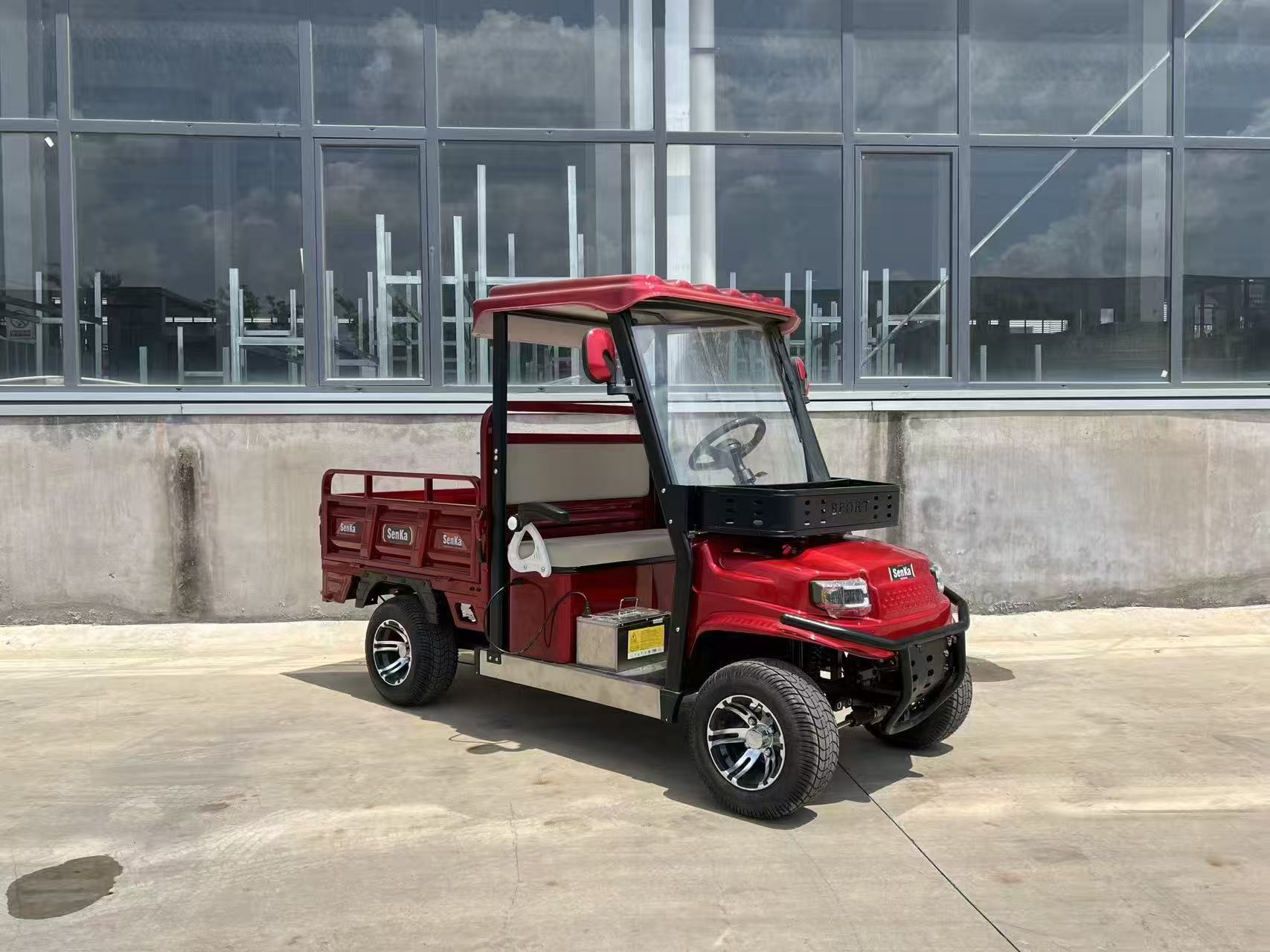
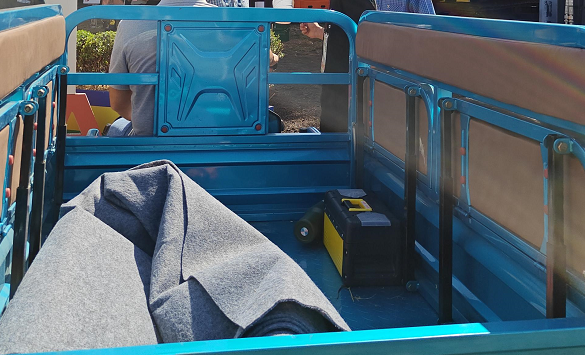
Driven by accelerated urbanization and surging demand for green travel, passenger tricycles, a traditional mode of transportation, are undergoing an unprecedented transformation. From a "transportation essential" in rural China to a "new favorite" on American farms, from a mainstay for freight transport in Southeast Asia to sightseeing vehicles on European streets, passenger tricycles are redefining the short-distance travel market with a new image of intelligence, electrification, and scenario-based applications.
China Market: Policy Dividends and Technological Iteration as Dual Engines
As the world's largest producer of tricycles, China's market size is projected to exceed 100 billion yuan by 2025, with annual exports exceeding 700,000 units, covering more than 130 countries and regions. At the policy level, the government has included tricycles in the management scope of new energy vehicles, promoting the upgrading of industry standards.
Technological innovation is another major engine. Lithium batteries are replacing lead-acid batteries as the mainstream, increasing energy density by 50%, achieving a range of 80 kilometers, and extending service life to 5 years. With over 60% adoption of intelligent features, GPS navigation, remote monitoring, and one-button start are standard, and some models even feature Level 2 autonomous driving technology.
Overseas Markets: From "Made in China" to "Global Solutions" The globalization of passenger tricycles exhibits regional adaptation characteristics:
US Market: Sales reached $440 million in 2024. 35% of farmers use electric tricycles as a pickup truck alternative, with purchase costs only one-fifth of traditional pickups. Guizhou entrepreneur Luo Hao, through localization modifications (such as English reversing warnings and battery insulation systems), reduced the price to $3,500, earning a million-dollar profit in three months. Despite facing anti-dumping and countervailing duty investigations from the US Department of Commerce, Chinese brands continue to penetrate the market through cross-border e-commerce platforms (such as Temu and TikTok Shop).
Southeast Asia and Africa: Markets like Thailand and India favor stylish electric sightseeing vehicles, while Africa, due to charging difficulties, prefers gasoline-powered models. Feimi Vehicles' electric tricycles launched in Tanzania have an energy cost of only $0.05 per kilometer, saving 5-10 times the operating costs compared to gasoline-powered vehicles.
European Market: The EU's 2027 ban on non-electric tricycles is forcing technological upgrades. Chinese companies secured a 20%-30% increase in orders at the Milan Motor Show in Italy, and special-purpose models such as high-pressure cleaning vehicles have a penetration rate exceeding 45% in the Middle East.
Despite the broad market prospects, passenger tricycles still face multiple challenges:
1. Cost Pressure: Shipping costs account for 30%-50% of product prices, and domestic production in the US lacks competitiveness due to high labor costs. Intense price wars exist in the low-to-mid-range market, with price reductions expected to reach 5%-10% by 2026.
2. Brand Recognition: In the international market, Chinese brands are still seen as "cost-effective options," while the high-end market is monopolized by international giants such as Honda and Suzuki.
Future Trends: Intelligentization, Scenario-based Applications, and Globalization
Technological Advancement: New technologies such as sodium-ion batteries and photovoltaic energy storage will further improve range and environmental performance, while 5G+V2X technology is expected to enable vehicle-to-everything (V2X) communication. Segmentation: Demand for specialized vehicles such as delivery trucks, ambulances, and mobility scooters for the elderly is surging, and companies are expanding application boundaries through customized designs (such as rust-proof coatings and battery insulation).
Standardization: China is promoting the inclusion of tricycles in the ISO international certification system, accelerating the alignment of technical standards with global standards, and exporting green solutions to countries along the Belt and Road Initiative.
From "China's three-wheeled vehicles" to "global green mobility partners," the transformation of passenger tricycles reflects the upgrading trajectory of Chinese manufacturing towards intelligent manufacturing. Driven by a tri-pronged approach of policy, technology, and market forces, this traditional tool is embarking on a new journey towards a broader future.
We use cookies to offer you a better browsing experience, analyze site traffic and personalize content. By using this site, you agree to our use of cookies. Privacy Policy